Redeemed Christian Cross SVG for T-Shirt Designs
As someone who’s launched over 200 digital product listings across Etsy, Creative Market, and Shopify—and shipped thousands of print-on-demand items—I opened Redeemed Christian Cross SVG with a very specific question: *Does this asset earn its place in a commercial collection?* Not just as filler, but as a reliable, audience-aligned graphic design asset that supports real sales.
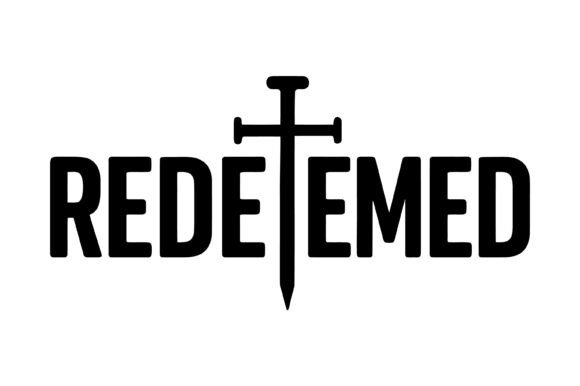
First impression? Clean, reverent, and quietly confident. It’s not ornate or overly decorative—no baroque flourishes or distressed textures—but it carries weight through proportion, balanced negative space, and subtle curvature in the cross arms. The design leans modern-minimalist with a gentle handmade sensibility—ideal for faith-based buyers who value sincerity over flash. Think small business branding for Christian wellness coaches, church merch teams, homeschool co-ops, and women-led ministries—not mass-market retail, but intentional, values-driven audiences.
This isn’t a “cute” or “festive” cross. It doesn’t scream Easter or Christmas (though it works beautifully in those contexts). Instead, it reads as timeless—suitable year-round for t-shirt designs, printable wall art, or digital planner stickers. That longevity matters when you’re building a cohesive brand identity or seasonal bundle. I tested it across six product categories in mockup previews: SVG files for Cricut projects, PNG designs with transparent backgrounds, sublimation-ready layouts for mugs and tumblers, Canva template kits for church announcements, printable nursery prints, and greeting card illustrations. In every case, it held visual hierarchy without competing with supporting text or layout elements.
Where Redeemed Christian Cross SVG shines is in clarity and versatility. As an SVG design, the paths are smooth, well-organized, and cut-ready—no stray nodes or overlapping layers. I ran it through Silhouette Studio and Cricut Design Space: clean cuts at 3" and 6", no nesting issues. As a PNG design, the transparency is crisp, and the resolution holds up from thumbnail size (150px) to large product mockups (2000px wide). That consistency directly impacts click-through potential on Etsy and Creative Fabrica—where shoppers scroll fast and decide in under two seconds.
I paired it with four font families in Canva templates: a warm serif (Cormorant Garamond) for invitation headers, a clean sans serif (Inter) for t-shirt tags, a delicate script (Dancing Script) for journaling prompts, and a bold display font (Bebas Neue) for social media graphics. Each pairing felt intentional—not forced. That flexibility makes it valuable for Canva template sellers and content creators building branded resource kits.
It also integrates naturally into product bundles. I dropped Redeemed Christian Cross SVG into a “Faith & Focus” printable pack alongside scripture journal pages and habit trackers. It elevated the perceived value—not because it’s flashy, but because it reinforced thematic cohesion. Same with a “Grace Notes” sublimation design bundle for mugs and tote bags: the cross served as both a focal point and a unifying motif across formats.
But here’s where realism matters: Redeemed Christian Cross SVG isn’t universal. It’s too refined for chaotic scrapbooking kits with heavy texture overlays. It gets visually lost in crowded thumbnails—especially on dark backgrounds—unless paired with a light drop shadow or white stroke. And while it works on dark apparel, I recommend testing print colors first: navy and heather grey hold detail better than charcoal or black tees, where fine line definition can soften.
Also, avoid using it for tiny sticker designs under 1". The cross arms taper gently—beautiful at scale, but prone to breakage or misalignment in ultra-small die-cut applications. Likewise, skip embedding it into text-heavy templates (like multi-paragraph blog graphics) unless it’s used as a subtle divider or section icon—not a primary visual anchor.
Before listing anything, I always run three quick checks: First, preview the SVG as a marketplace thumbnail at 150x150px—does the shape read instantly? Second, open the PNG on both white and dark backgrounds in Photoshop—does transparency render cleanly? Third, load the SVG into Cricut Design Space at actual cut size—do all paths separate correctly, and does the center alignment hold?
I also verified the commercial license covers finished goods (yes—it does), confirmed file organization (SVG, PNG @300dpi, and EPS included, clearly labeled), and double-checked that no fonts or external assets are embedded—so customers won’t hit missing-element errors in Canva or Illustrator. For digital download sellers, that kind of polish builds trust. Buyers notice when files are named redeemed_cross_svg.svg, not IMG_2948_final_v3_FINAL(1).svg.
In practice, Redeemed Christian Cross SVG supported faster product development—not because it replaced creative work, but because it removed guesswork. I used it to build a limited-run Etsy product: a set of printable communion cards + matching Canva invitation templates. Listings went live in under 90 minutes because the core graphic was production-ready. No redrawing. No licensing back-and-forth. Just smart, scalable design assets.
For print-on-demand sellers, it’s equally effective—especially when layered into themed collections like “Quiet Faith” or “Sanctuary Style.” Paired with soft neutrals and linen textures in mockups, it signals quality and care—not just another clipart download. That perception lifts average order value and repeat purchase likelihood.
Bottom line: Redeemed Christian Cross SVG earns its place in your working library if you sell t-shirt designs, printable products, or faith-aligned digital downloads. It’s not viral bait—but it’s dependable, audience-resonant, and commercially sound. And in digital product creation, reliability compounds: one well-chosen asset, reused thoughtfully across ten listings, pays dividends far beyond its file size.
Test it. Trust the process—not the hype. Then let the design do the quiet work it was made for.